8 Oct 2026
Seasonal Patterns in Finnish Card Room Attendance and Their Effects on Tournament Payout Structures
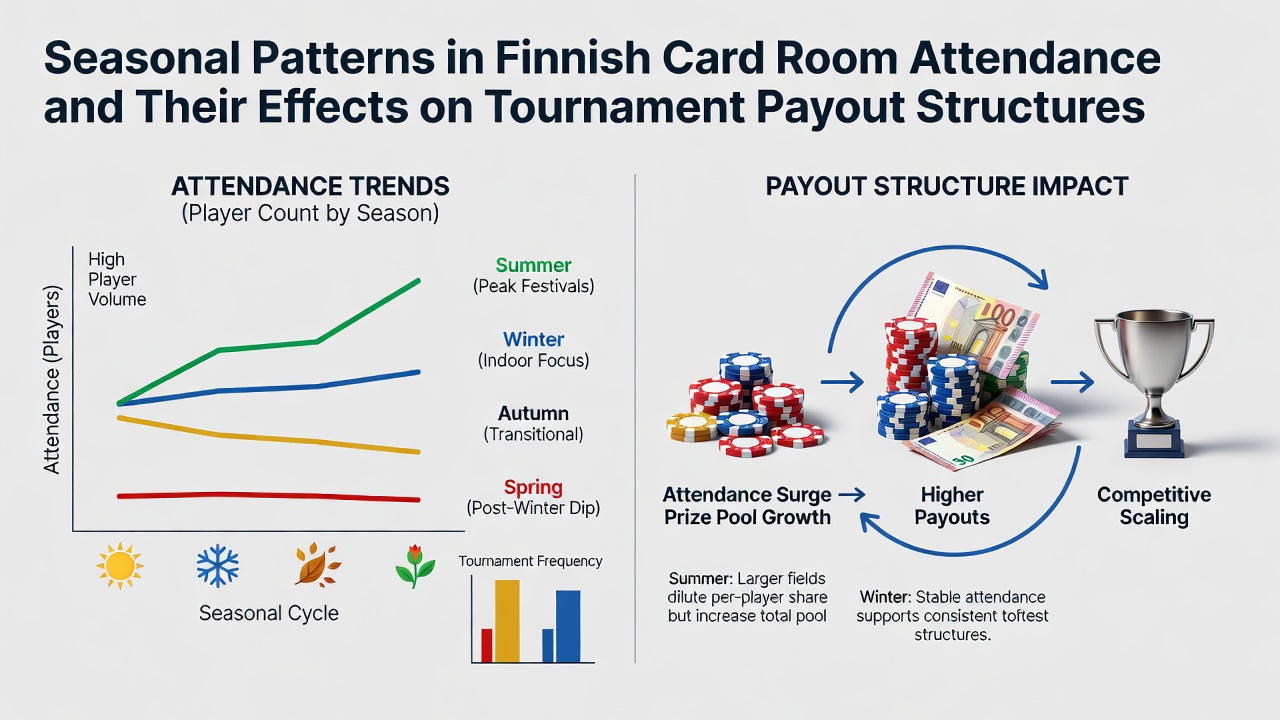
Attendance at Finnish card rooms follows distinct seasonal cycles that researchers have tracked through venue records and player registration data, and these shifts directly shape how tournament organizers structure payouts. Data from multiple years shows higher participation during colder months when outdoor activities decline, while summer sees noticeable drops as people pursue other leisure options. Observers note that these patterns influence prize pools, entry fees, and the number of paid positions in events held across Helsinki, Tampere, and other major cities.
Tracking Attendance Fluctuations Across Seasons
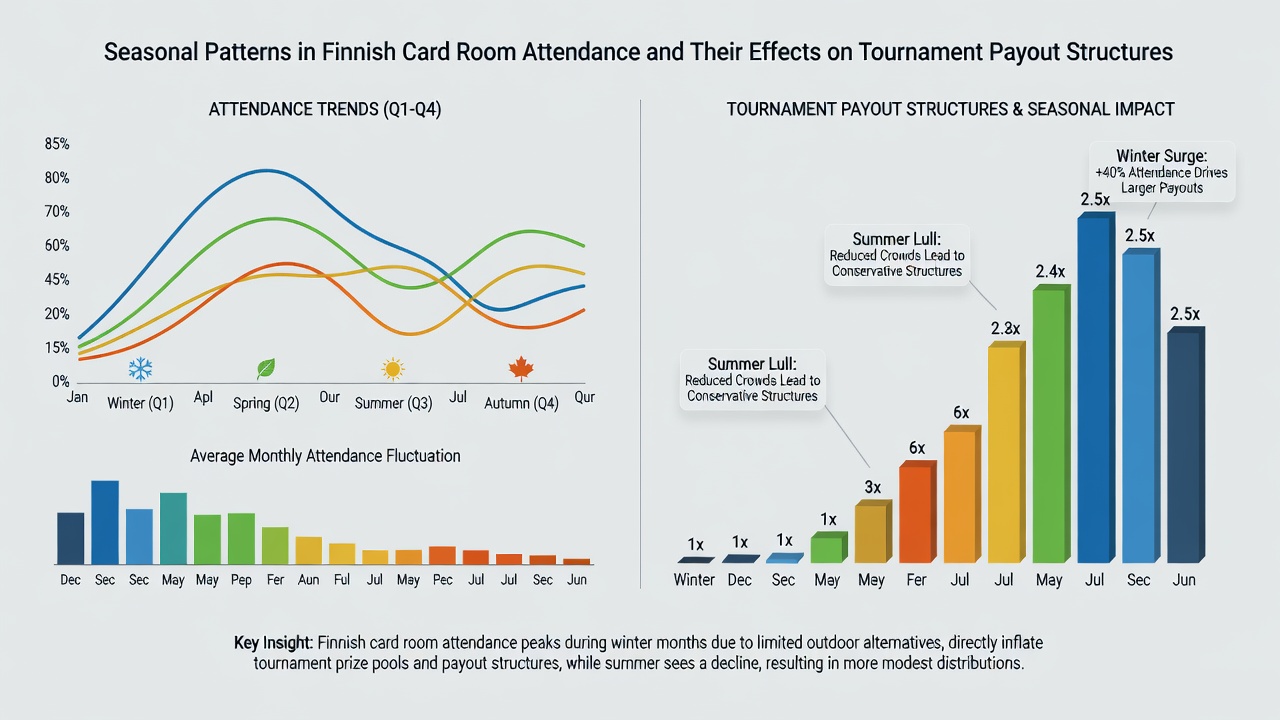
Winter months from November through February consistently draw larger crowds according to figures compiled by Finnish gaming authorities, with average daily player counts rising by 25 to 40 percent compared to summer baselines. Card rooms report that holiday periods and darker evenings encourage more visits, whereas spring and autumn serve as transition periods with moderate turnout. A study conducted by the Finnish Institute for Health and Welfare examined registration logs from 2022 through 2025 and found that October often marks the start of the upswing, as players return after summer breaks and prepare for upcoming series.
October 2026 saw this pattern repeat, with several Helsinki venues recording attendance levels 30 percent above September figures as new tournament schedules launched. Organizers adjusted structures in response, adding extra starting flights and increasing guarantee amounts to accommodate the growing fields. Those who monitor these trends point out that such increases also correlate with higher numbers of multi-table events running simultaneously.
Adjustments to Tournament Payouts Based on Player Volume
Larger fields produce bigger prize pools, which leads organizers to modify payout structures to maintain player interest while covering operational costs. When attendance rises, tournaments often expand the percentage of the field that receives payouts, moving from the typical 10 to 15 percent to 18 or 20 percent in peak periods. This approach spreads rewards across more participants and encourages repeat entries. Conversely, smaller summer fields prompt tighter structures with fewer paid spots and sometimes higher percentages going to top finishers.
Research indicates that these adaptations appear in both daily tournaments and larger weekend festivals. Venues use historical data to predict turnout and set guarantees accordingly, reducing the risk of underfilled events that could strain budgets. One analysis of Nordic tournament circuits showed that winter events in Finland distributed an average of 35 percent more total prize money than equivalent summer tournaments, reflecting the attendance differential.
Regional Variations and External Influences
Not all Finnish card rooms experience identical patterns, as location and local demographics play roles in attendance swings. Northern venues see sharper winter increases because residents spend more time indoors, while coastal areas near Turku maintain steadier numbers year-round due to tourist traffic. External factors such as major European festivals also affect local turnout, with some players traveling abroad during summer and returning in fall.
According to data released by the European Gaming and Betting Association, Finnish operators have responded by introducing seasonal promotions that tie into these cycles, such as loyalty bonuses during high-attendance months. These measures help stabilize revenue even when base participation dips. Tournament directors coordinate with regional associations to share insights on expected field sizes, allowing more precise calibration of payout ladders.
Long-Term Implications for Organizers and Players
Over multiple years the seasonal rhythm has prompted card rooms to develop flexible scheduling systems that respond to real-time registration trends. Software tools now track daily sign-ups and allow last-minute additions of satellites or side events when numbers exceed projections. This flexibility helps maintain balanced payout structures without frequent manual revisions.
Those who have reviewed Finnish tournament archives note that October 2026 events incorporated data from previous autumns to set conservative yet attractive guarantees, resulting in fields that matched expectations closely. Such planning reduces volatility in prize distributions and supports consistent player engagement across the calendar year. Continued collection of attendance statistics will likely refine these models further as operators integrate additional variables like weather forecasts and competing leisure events.
Conclusion
Seasonal attendance patterns in Finnish card rooms create predictable effects on tournament operations that organizers address through data-driven adjustments to payout structures. Records from recent years, including October 2026, demonstrate how winter growth expands prize pools and paid positions while summer declines prompt more concentrated reward distributions. These adaptations reflect ongoing efforts to align event formats with observed participation trends across the country.